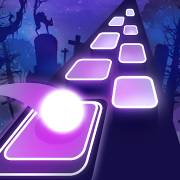
- Tiles Hop: EDM Rush
- 4.4

My Supermarket Simulator 3D
Screwdom
456 Run Challenge: Clash 3D
Block Blast!
Jewel Blast : Temple
Fruit Merge: Juicy Drop Game
Papa's Freezeria To Go!
Poppy Playtime Chapter 2
Poppy Playtime Chapter 1
Pokemon Go
Toca Life World
Roblox
Angry Birds Friends
slither.io
Forspoken
Dying Light 2 Stay Human













Developer:
Amanotes Pte LtdLatest Version:
3.6.3Updated on:
August 29, 2021File Size:
90M
Install To Phone
Choose a platformThe games on our website are sourced from the App Store and Google Play. No viruses, no malware, you can download them through the recommended download links.
Tiles Hop: EDM Rush - The Rhythm Ball Game That Punishes Sloppy Timing
Tiles Hop: EDM Rush is a rhythm-arcade game built by Amanotes where a bouncing ball drops down a lane of colored tiles synced to a music track, and one mistimed tap sends it flying off the path. I have played more rhythm-tap games than I can count over the last decade, and Tiles Hop earns its spot because it strips the genre down to one input, one lane, and pure reaction speed. There is no chord reading like Magic Tiles 3 asks for, just a ball, gravity, and a beat you either match or don't.
This piece covers how the core loop actually works, what separates good runs from wipeouts, where the game came from, and the honest tradeoffs against its closest rivals like Piano Tiles and Magic Tiles 3.
What Is Tiles Hop: EDM Rush and Who Made It?
Tiles Hop: EDM Rush is a mobile arcade rhythm game developed and published by Amanotes, a Vietnam-based studio known for a string of tap-to-the-beat titles built on the Unity engine. The game first released in November 2017 for Android and iOS.
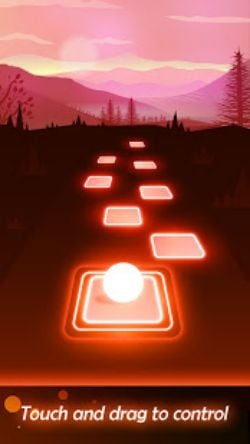
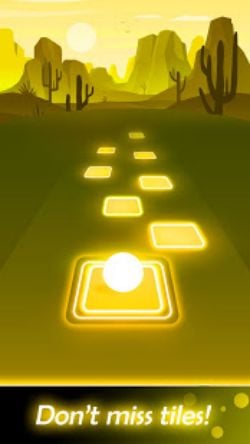
The concept is simple to describe but hard to master. A ball auto-bounces forward along a narrow track, and tiles appear in rhythm with the underlying track's beat. You steer left or right with a swipe or tap to keep the ball landing on a tile instead of the open gap beside it, and every landing that lines up with the beat feeds the song forward.
How Do You Play Tiles Hop: EDM Rush?
You control horizontal movement only, sliding the ball across a limited set of lanes while it falls automatically toward the next tile. Missing a tile, or landing off the beat too many times in a row, ends the run early and you restart the track from the beginning.
In practice the game rewards small, controlled swipes over big dramatic ones. New players tend to overcorrect, sliding all the way across the track when a short nudge would have kept the ball centered. The best players I've seen treat the swipe like a metronome tap rather than a directional shove, keeping their thumb near the middle of the screen and making tiny adjustments in time with the drop.
What Songs and Modes Does Tiles Hop Include?
Tiles Hop runs each level as its own song, with EDM and electronic remixes making up the bulk of the catalog, alongside pop and dance tracks licensed or arranged for the beat-matching format. Community playlists reference tracks like TheFatRat's collaborations as recurring favorites among long-time players, and unlocking additional songs is usually tied to in-game currency earned from clearing runs.
Progression in these Amanotes titles typically follows a similar pattern across their catalog. Common structural elements include:
- A rotating or expanding song list unlocked through in-run currency
- Difficulty that scales with tempo and tile density rather than separate difficulty settings
- Cosmetic ball skins that change visuals but not the underlying hitbox
- Short session lengths built around replaying a single track until you clear it clean
Can You Play Tiles Hop: EDM Rush Online for Free?
Several browser portals host playable versions of Tiles Hop: EDM Rush that run without an app install, which is how a lot of players first try the format before deciding whether to grab the mobile release. Browser versions strip out account syncing and some of the unlock systems tied to the native app, but the core swipe-to-the-beat mechanic carries over intact.
If you are deciding between the app and a browser version, the practical difference comes down to input precision. Touchscreens on phones tend to register swipes more cleanly than a mouse-drag substitute on desktop, so competitive players chasing a clean run usually stick to mobile.
How Does Tiles Hop Compare to Magic Tiles 3 and Piano Tiles?
Tiles Hop, Magic Tiles 3, and Piano Tiles all sit in the same tap-rhythm family but ask for different skills. Piano Tiles is about raw tap speed across four static columns, Magic Tiles 3 layers in actual piano-style note reading and sustained holds, and Tiles Hop is purely about lateral timing against a moving ball.
What trips up new players switching between them is muscle memory. Someone coming from Magic Tiles 3 expects to react to falling notes in fixed lanes, but Tiles Hop's ball never stops moving forward, so the timing window is dictated by the drop arc rather than a note reaching a fixed line. That difference alone makes Tiles Hop feel faster and less forgiving even at comparable tempos.
What Tips Actually Improve Your Tiles Hop Score?
Consistent scoring in Tiles Hop comes down to a handful of habits that separate players who clear a song from players who bail out halfway through. None of this is exotic advice, it is just what actually holds up across repeated runs.
The habits that matter most:
- Keep your finger light on the screen instead of pressing hard, since pressure doesn't affect speed but tension slows your reaction
- Track the tile pattern a beat ahead rather than staring at the ball itself
- Restart immediately after a miss instead of finishing out a broken run, since the song won't sync back up
- Practice slower tracks first to build the rhythm sense before moving to faster EDM remixes
- Play in short sessions, since fatigue shows up in this genre as late reactions within a few minutes
Frequently Asked Questions
Who developed Tiles Hop: EDM Rush?
Amanotes Pte Ltd developed and publishes Tiles Hop: EDM Rush, built on the Unity engine, with an initial release in November 2017.
What platforms is Tiles Hop: EDM Rush available on?
The game is available natively on Android and iOS, and several web portals also host browser-playable versions.
Is Tiles Hop: EDM Rush the same as Tiles Hop: Music Ball Smash?
They come from the same Amanotes lineage of ball-and-tile rhythm games and share near-identical mechanics, though app store listings sometimes use different titles for regional releases.
How is Tiles Hop different from Piano Tiles?
Piano Tiles uses static columns and rewards raw tap speed, while Tiles Hop has a continuously moving ball whose drop arc sets the timing window, which makes the pacing feel less predictable.
Do I need to pay to unlock songs in Tiles Hop?
Songs are generally unlocked through in-game currency earned by playing rather than a hard paywall, though this can vary by version and platform.













Similar Games
Samkok: New Force
Snake Clash!
Kpop Piano Beats - Music Game
Friday Night Funkin'
Buildit
Sprunki Beat: Full Mod Music
Conquer Countries
Gossip Harbor: Merge & Story
Carnival Tycoon: Idle Games
Music Piano 7: Rush Song Games
Kingshot
My Talking Tom Friends 2
Goods Puzzle: Sort Challenge
I Am Security
Last War:Survival Game
mo.co
Block Crazy Robo World
Color Block Jam




Reviews
No comment yet !