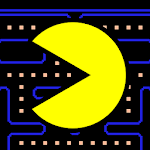
- PAC-MAN
- 4.2

My Supermarket Simulator 3D
Screwdom
456 Run Challenge: Clash 3D
Block Blast!
Jewel Blast : Temple
Fruit Merge: Juicy Drop Game
Papa's Freezeria To Go!
Poppy Playtime Chapter 2
Poppy Playtime Chapter 1
Pokemon Go
Toca Life World
Roblox
Angry Birds Friends
slither.io
Forspoken
Dying Light 2 Stay Human










Developer:
BANDAI NAMCO Entertainment America Inc.Latest Version:
11.3.3Updated on:
Nov 1, 2023File Size:
93.32 MB
Install To Phone
Choose a platformThe games on our website are sourced from the App Store and Google Play. No viruses, no malware, you can download them through the recommended download links.
Pac-Man: The Maze Classic Everyone Still Plays
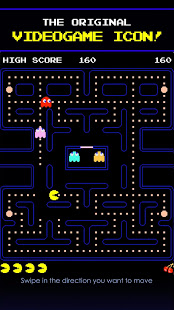
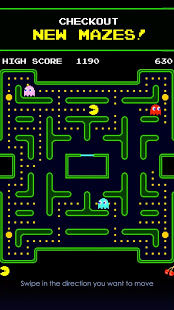
Pac-Man is a 1980 maze arcade game designed by Toru Iwatani and originally released in Japan by Namco before Midway brought it to North America later that year. The goal is simple on paper: guide a yellow circle through a maze, eat every dot, and avoid four ghosts that are actively hunting you.
What made it stick around for more than four decades is how that simple loop hides a surprising amount of depth. In practice, the ghosts do not chase randomly. Each one follows its own targeting logic, and learning those patterns is the real skill ceiling of the game.
This guide covers where Pac-Man came from, how the core mechanics actually work, and what separates players who clear a few boards from the ones who can run a pattern to the kill screen.
Who created Pac-Man and when did it come out?
Pac-Man was designed by Toru Iwatani at Namco and first released in Japanese arcades on May 22, 1980, under the title Puck Man. Midway published it in North America a few months later that August, and the name changed to Pac-Man to avoid an obvious vandalism-friendly pun on the original title.
The character design came from a simplified pizza shape with a wedge cut out, not from a story-driven concept. That minimalism is part of why it translated so well across cultures and still reads clearly on a phone screen today.
BANDAI NAMCO Entertainment now maintains the modern mobile release, which has gone through steady updates over the years to keep it running on current devices.
How do you play Pac-Man for beginners?
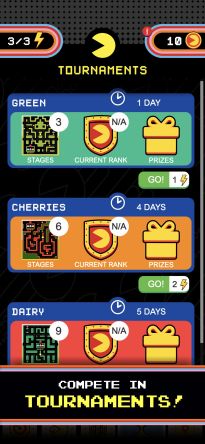
You control Pac-Man through a maze using four directions, eating small dots for points while avoiding direct contact with the four ghosts patrolling the same space. Four larger flashing dots, called power pellets, sit in the corners of the maze and temporarily flip the situation in your favor.
Eating a power pellet turns the ghosts blue and vulnerable for a short window, during which you can eat them for bonus points instead of running from them. New players tend to burn through pellets too early out of panic, then have nothing left when they actually get cornered later in the board.
The better habit is to save at least one pellet for when a ghost is genuinely blocking your path, rather than triggering them the instant you see one nearby.
What do the four ghosts actually do?
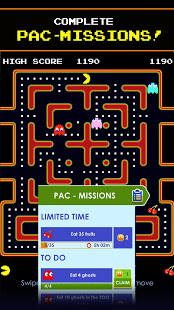
Each of the four ghosts, nicknamed Blinky, Pinky, Inky, and Clyde, runs a distinct targeting behavior rather than chasing at random. Blinky directly pursues your current position and speeds up as a board empties out, which is what usually forces the endgame.
Pinky tries to get ahead of you by targeting a spot several tiles in front of your direction of travel, so cutting corners tightly can throw off its aim. Inky's behavior depends partly on Blinky's position, which makes it the least predictable of the four for new players.
Clyde alternates between chasing you and retreating to a home corner once he gets close, which is why experienced players treat him as the least threatening of the group.
Understanding this is the difference between reacting to ghosts and actually out-maneuvering them:
- Blinky: direct chaser, speeds up late-game
- Pinky: targets ahead of your movement
- Inky: erratic, tied to Blinky's position
- Clyde: chases then retreats, easiest to lose
How do you beat level 1 and clear early boards consistently?
Clearing the first level comes down to clearing dots efficiently while keeping at least one escape route open at all times, rather than committing to a single path through the maze. The biggest mistake new players make is diving into a dead-end tunnel while being chased, which almost always ends the run.
Sticking near the center intersections early gives you more options if a ghost appears unexpectedly. Save a power pellet for the moment a ghost is directly between you and your next planned route, not as a first response to seeing one on screen.
The four tunnels on the sides of the maze let you cross the screen and briefly outrun anything chasing you, since ghosts move slightly slower while passing through them.
Where can you play Pac-Man today?
Pac-Man is available on modern platforms including Android, iOS, Nintendo Switch through Arcade Archives, and various official web ports, decades after its original arcade release. BANDAI NAMCO Entertainment America Inc. publishes the current official mobile app, which has been updated many times since launch to stay compatible with newer phones.
There is also a well-known browser version that Google published as a playable homepage doodle back in 2010 for the game's 30th anniversary, which introduced a new generation to the original maze layout.
For players who want variety beyond the 1980 original, the franchise has expanded well past a single formula over the years.
- Ms. Pac-Man, which adds moving fruit and multiple maze layouts
- Pac-Man 256, an endless runner take on the maze formula
- Pac-Man 99, a battle royale spin using classic maze mechanics
What is Pac-Man 99 and how is it different?
Pac-Man 99 is a battle royale variant where 99 players each navigate their own maze simultaneously, sending ghosts to rivals' boards as they clear dots. It keeps the core eating and dodging loop intact but adds a competitive layer absent from the original arcade release.
It plays faster than classic Pac-Man because boards cycle quickly and jammer ghosts sent by other players add pressure you cannot predict in advance. Fans of the traditional formula sometimes find it overwhelming at first, but the underlying ghost-avoidance skills carry over directly.
Frequently Asked Questions
Who designed Pac-Man?
Toru Iwatani designed Pac-Man at Namco, and it released in Japanese arcades on May 22, 1980.
What do the ghost colors mean in Pac-Man?
Blinky (red) chases directly, Pinky (pink) targets ahead of your movement, Inky (cyan) behaves erratically based on Blinky's position, and Clyde (orange) alternates between chasing and retreating.
Is Ms. Pac-Man different from the original Pac-Man?
Yes. Ms. Pac-Man adds multiple maze layouts, moving fruit bonuses, and slightly different ghost behavior compared to the 1980 original.
What platforms can you play Pac-Man on now?
Current official releases include Android, iOS, and Nintendo Switch via Arcade Archives, alongside various web-based ports.
What is Pac-Man 99?
Pac-Man 99 is a battle royale spin-off where up to 99 players compete across simultaneous mazes, sending ghosts to opponents as they clear their own boards.







Similar Games
Samkok: New Force
Snake Clash!
Kpop Piano Beats - Music Game
Friday Night Funkin'
Buildit
Sprunki Beat: Full Mod Music
Conquer Countries
Gossip Harbor: Merge & Story
Carnival Tycoon: Idle Games
Music Piano 7: Rush Song Games
Kingshot
My Talking Tom Friends 2
Goods Puzzle: Sort Challenge
I Am Security
Last War:Survival Game
mo.co
Block Crazy Robo World
Color Block Jam





Reviews
No comment yet !