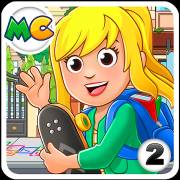
- My City : After School
- 4.1

My Supermarket Simulator 3D
Screwdom
456 Run Challenge: Clash 3D
Block Blast!
Jewel Blast : Temple
Fruit Merge: Juicy Drop Game
Papa's Freezeria To Go!
Poppy Playtime Chapter 2
Poppy Playtime Chapter 1
Pokemon Go
Toca Life World
Roblox
Angry Birds Friends
slither.io
Forspoken
Dying Light 2 Stay Human








Developer:
My Town Games LTDLatest Version:
2.5.1Updated on:
October 30, 2020File Size:
53M
Install To Phone
Choose a platformThe games on our website are sourced from the App Store and Google Play. No viruses, no malware, you can download them through the recommended download links.
My City: After School - A Full Guide to the Kid-Friendly City Sim
My City: After School is a sandbox roleplay app from My Town Games LTD, the studio behind the wider My City and My Town series, built for kids roughly 4 to 12 who want to poke around a small virtual town without any timers, ads breaking up the fun, or fail states chasing them off a level. There's no score to chase and no boss to beat. You just pick a kid, walk them out of school, and decide what their afternoon looks like.
I've spent a fair amount of time with the My Town Games catalog over the years, and After School is one of the tighter entries. It doesn't try to be everything. It picks six spots around a small town and lets you dress up characters and putter around each one at your own pace, which is exactly the pitch for this kind of open-ended kids' app.
What is My City: After School about?
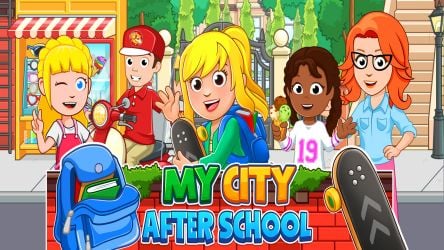
My City: After School is a free-roam simulation app where the player controls a school-age character exploring a small town after the final bell. There's no plot to follow and no dialogue tree to click through. Instead the app hands you a cast of about 20 dressable characters and turns them loose across six connected locations.
What trips up new players, especially younger ones handing the phone back and forth with a parent, is expecting some kind of objective. There isn't one. The app rewards poking around: opening drawers, trying on outfits, petting animals at the pond. It's closer to a digital dollhouse than a game with rules, and that's the point.
What locations can you visit in My City: After School?
My City: After School includes six named locations, each themed around a different after-school activity. The developer lists these consistently across its store pages, and in practice they're the backbone of the whole app.
Each spot has its own small set of interactive objects rather than one giant open map, which keeps load times short and makes the app easier for younger players to navigate without getting lost.
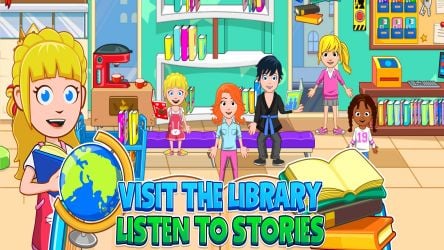
- The Library, for reading and quiet browsing
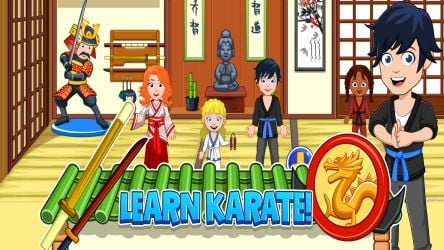
- The Karate Dojo, for practicing moves and matches
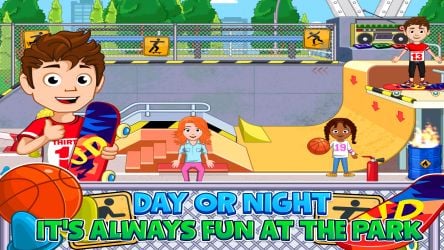
- The Skateboard Park, for tricks and ramps
- The Fountain Park, a central outdoor hangout
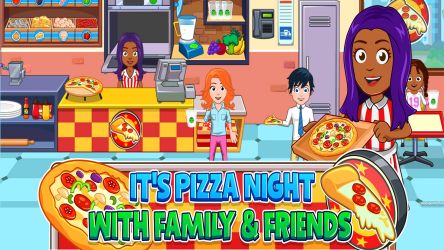
- The Pizza Store, for ordering and serving food
- The Pond, home to animals and an RC boat area
Who can you play as in My City: After School?
Players choose from around 20 dressable characters, each with swappable outfits, hairstyles, and accessories pulled from the app's wardrobe system. There's no single protagonist. You can hop between a skater kid, a bookworm, a karate student, and others depending on which corner of the town you feel like exploring that session.
The best setups I've seen for this app involve two kids sharing a device and trading characters between locations, since nothing is timed and nobody loses their spot by handing off the phone.
What to play with classmates in My City: After School?
The karate dojo and the skateboard park are the two spots built for side-by-side play, since both let two characters occupy the same space and act out matches or tricks together. Kids pairing up on one device tend to gravitate there first.
The pizza store works well too, with one character taking orders and the other cooking, which turns into a loose game of pretend restaurant. None of it is scored, so classmates playing together are really just improvising a scene rather than competing.
Is My City: After School free to play?
My City: After School is distributed through the Google Play Store, the Apple App Store, and the Amazon Appstore, with the developer's own site also listing it. Pricing and any in-app purchases can shift over time and by region, so the safest move is checking the listing on whichever store you use before downloading.
The app has been out since 2018 and the developer's changelog shows updates continuing through at least version 2.5.1, so it's had a long run of maintenance rather than being abandoned after launch.
How does My City: After School compare to other My Town Games titles?
My City: After School sits inside the same franchise as My City, My Town, and Tag After School, all built by My Town Games LTD around the same no-fail, dress-up-and-explore formula. What separates After School from the core My City app is scope. It's a single themed setting (six locations centered on after-school activities) rather than a sprawling multi-building city.
If you've already played My Town or the main My City app, the controls and wardrobe system will feel immediately familiar. The tradeoff is that After School trades breadth for a tighter, more focused afternoon-in-town theme, which some parents actually prefer because it's less overwhelming for a first-time player.
Who is My City: After School designed for?
My City: After School targets roughly ages 4 to 12, per the developer's own age guidance, with an interface simple enough for a four-year-old to tap through unassisted. There's no reading requirement to progress and no combat or violence beyond the pretend karate sparring.
Parents looking at this alongside other kids' apps should know the appeal here is open-ended pretend play rather than puzzles or achievements. Kids who like structured goals may bounce off it faster than kids who enjoy imaginative, unscripted play.
Frequently Asked Questions
What to play with classmates in My City: After School?
The dojo and skate park are built for two characters at once, and the pizza store works well as an improvised two-player restaurant scenario.
How many locations does My City: After School have?
Six: the Library, Karate Dojo, Skateboard Park, Fountain Park, Pizza Store, and the Pond.
What platforms is My City: After School available on?
It's available on Android through Google Play, on iOS through the App Store, and on the Amazon Appstore.
Is My City: After School the same as My Town or My City?
No. It's a separate app in the same My Town Games franchise, focused on a single after-school setting rather than the broader city or town maps in the other titles.
How old should kids be to play My City: After School?
The developer targets roughly ages 4 to 12, with a simple enough interface for younger kids to use without help.





Similar Games
Samkok: New Force
Snake Clash!
Kpop Piano Beats - Music Game
Friday Night Funkin'
Buildit
Sprunki Beat: Full Mod Music
Conquer Countries
Gossip Harbor: Merge & Story
Carnival Tycoon: Idle Games
Music Piano 7: Rush Song Games
Kingshot
My Talking Tom Friends 2
Goods Puzzle: Sort Challenge
I Am Security
Last War:Survival Game
mo.co
Block Crazy Robo World
Color Block Jam




Reviews
No comment yet !